
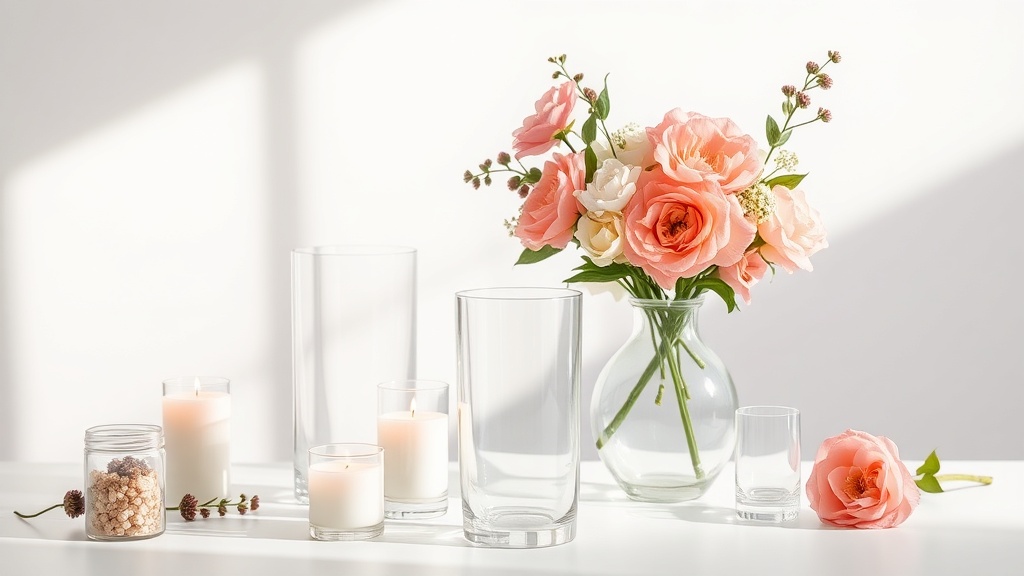
Short answer: To buy wholesale glass vases for florists profitably in 2026, focus on proven silhouettes (cylinders, cubes, bud vases, compotes), order in balanced size runs, standardize on clear Polish-made glass for reliability, check wall thickness and lip finish, buy case-packed by event season, and lock in replenishment with a distributor who can deliver mixed pallets, fast turns, and consistent quality. Below you’ll find the complete, practical playbook—specs to request, quantities to stock, packing to insist on, and how to forecast, merchandise, and protect margins across floral and gift channels.
Why This Guide, and Who It’s For
This guide was built for wholesale and retail florists, wedding and event designers, and gift retailers who purchase vases by the case or pallet. It compiles field-tested practices from trade buyers working peak weeks (Valentine’s Day, Mother’s Day), wedding season, and Q4 gifting. As a Canadian distributor of Polish-made glassware, candles, artificial florals/greenery, and decorative supplies, Canpol supports professionals across Canada and the USA with dependable supply and trade-first service. Use this as your standard reference before each buying cycle.
The Core Vase Assortment Every Florist Needs
The most profitable wholesale assortments are built around year-round demand, then flexed with seasonal shapes and finishes. Start with a core kit that covers everyday arrangements, sympathy work, corporate accounts, and weddings. Then layer in trend pieces without overexposing your cash flow.
Must-Have Shapes and Where They Earn
- Clear Cylinders (short to tall): Universal workhorses for hand-tied bouquets, submerged stems, floating candles, altar pieces, and corporate lobby designs. Easy to store and stack by diameter.
- Cubes/Squares: Ideal for modern desk arrangements and compact centerpieces; efficient on transport carts and shelves.
- Buddies/Bud Vases: Low-stem count accents for cocktail tables, hospitality, and retail impulse. Crucial for wedding tablescapes.
- Gathered/Hourglass/Rose Vases: Classic retail gift silhouettes—fast to design and perceived as premium.
- Compotes & Footed Bowls: Event-forward for foamless mechanics and airy garden-style designs.
- Bubble Bowls/Fishbowls: For floating candles, terrarium-style accents, and sympathy designs.
- Trumpet/Flared Vases: Ceremony aisles, buffet accents, and tall focal points.
- Apothecary/Jars with Lids: Gift merchandising, candy bars, and retail upsells.
Recommended Size Run (Baseline)
Choose 2–3 diameters for cylinders (e.g., 3″, 4″, 5″) each in two heights; a 4″ and 5″ cube; small/medium compote; and a 2″ opening bud vase. This covers 80% of daily work for most florists, leaving room for specialties without bloating inventory.
Comparison: Vase Types vs. Use Cases
| Vase Type | Best For | Typical Opening | Key Advantages | Notes for Buyers |
|---|---|---|---|---|
| Clear Cylinder | Everyday, weddings, corporate, floating candles | 3–6 in (7.5–15 cm) | Stackable, versatile, easy cost control | Standardize diameters; match to common liners/grids |
| Cube/Square | Desk, low centerpieces, gift retail | 4–6 in (10–15 cm) | Stable footprint, efficient storage | Check seam quality on edges and base thickness |
| Bud Vase | Cocktail tables, tablescapes, retail add-ons | 0.75–1.5 in (2–4 cm) | Low-stem count margins, fast turns | Buy deep; color/finish can differentiate |
| Compote/Footed | Garden style, foamless mechanics | 5–8 in (13–20 cm) | Elevated look, supports grids/frogs | Confirm weight balance and foot stability |
| Bubble Bowl | Floating candles, terrarium accents | 4–10 in (10–25 cm) | Multi-use, strong retail visuals | Request consistent curvature to fit standard floats |
| Trumpet/Flared | Aisles, hotel lobbies, focal points | 5–8 in (13–20 cm) | Height drama, upsell potential | Check center of gravity; thicker bases preferred |
| Apothecary/Jar | Gift merchandising, candy bars | Varies by lid | Cross-category sales | Verify lid fit and gasket where applicable |
What to Look For: Technical Specs That Matter
All clear glass is not equal. In professional floral work, small differences in glassmaking and finishing translate to faster design times, fewer returns, and safer transport. When you evaluate wholesale glass vases for florists, use this spec checklist.
Material and Clarity
- Clarity: Request low-distortion clear glass with minimal seed bubbles. Polish-made glass is known for high optical clarity and consistent composition.
- Color Consistency: If ordering tinted glass, insist on consistent hue lot-to-lot. Small runs can vary without strong QA.
Dimensional Consistency
- Opening Diameter (OD): Key for grid lids, reusable mechanics, and candle inserts. Measure multiple units per case.
- Height Tolerance: Especially on cylinders used in multi-level centerpieces; aim for tight variance so centerpieces read as a set.
- Base Flatness: Wobble wastes time and risks breakage. Check tables for steady sit.
Wall and Base Thickness
- Wall Thickness: Thicker walls on large-diameter or tall vessels improve durability in event logistics.
- Base Weight: Heavier bases stabilize tall stems and reduce tip risk in foot traffic.
Lip Finish
- Fire-Polished or Ground Lips: Smooth rims protect stems and hands, and improve perceived quality in retail.
- Uniform Roll or Bead: On rose vases and cylinders, a consistent bead helps with elastic banding and decorative binding.
Seams and Joints
- Mould Seams: Expect seams on many pressed or mould-blown shapes; they should be clean and aligned.
- Join Marks: On footed compotes, inspect join strength and neatness at the stem/base.
Packaging and Case Specs
- Case Pack: The most efficient cases align with your sales velocity (e.g., 6, 12, 24). Avoid over-large packs on slow movers.
- Internal Dividers: Corrugated cells or foam sleeves prevent rubbing and lip chipping.
- Master Carton Strength: Double-wall or reinforced corners for larger vessels. Look for edge crush resistance appropriate for pallet stacking.
Clear vs. Colored/Finished Glass: When Each Wins
Clear remains the productivity king in wholesale programs. Colored and finished glass earns when it creates retail differentiation or aligns with event palettes.
Clear Glass Advantages
- Matches any floral palette and venue style.
- Photographs consistently for proposal decks and sample tables.
- Streamlines back-of-house: same mechanics, same cleaning process.
Colored or Specialty Finishes
- Tinted: Subtle smoke, blush, or amber for editorial weddings and boutique retail. Buy in modest case counts unless you have pre-booked demand.
- Frosted/Etched: Hides stems, elevates perceived value. Good for hotel and corporate contracts.
- Metallic/Reactive Coats: For candlelight-intensive events; ensure finish compatibility with water and cleaning agents.
How Much to Stock: Forecasting by Season
Right-sizing inventory is the fastest path to better margins. Use a simple, conservative model for each SKU group.
Step-by-Step Forecasting Method
- Segment Demand: Split by channel (retail, event, corporate). Each behaves differently.
- Set a Baseline: Use last 8–12 weeks of sales or, if starting fresh, a proxy from similar shapes and sizes.
- Apply Seasonality: Multiply by factors for peak weeks (e.g., Valentine’s, Mother’s Day, wedding months). Plan for earlier arrival.
- Account for Lead Time: Add distributor lead time plus a safety buffer. For high-risk shapes, keep an extra case locally.
- Decide Case Depth: Round to full cases; small items like bud vases usually warrant deeper positions.
- Lock Replenishment: Arrange scheduled drops with your distributor so stock lands just ahead of events.
Example: Cylinder 4″ x 10″ for Wedding Season
Assume you average 12 units/week March–May, then 30 units/week June–September, with a two-week lead time. Safety stock one case of 12 units. For a 6-week wedding sprint, target on-hand = (30 x 6) + 12 safety = 192 units ≈ 16 cases of 12. Stagger deliveries in two drops to reduce storage pressure.
Buying Polish-Made Glass Through a North American Distributor
Purchasing Polish-made glassware via a Canadian distributor gives you European craftsmanship with North American logistics. You benefit from predictable quality, shorter domestic transit, and the ability to mix glass with complementary décor (candles, artificial greens) on the same order.
Advantages for Trade Buyers
- Consistency: Polish glass producers are known for refined finishing and reliable dimensions across runs.
- Smoother Logistics: Domestic distribution reduces freight shocks, customs handling, and damages versus direct import for smaller buyers.
- Mixed Pallets: Combine case packs across vase shapes and other décor to hit freight minimums efficiently.
Packing, Freight, and Damage Prevention
Freight and damages can erase margins. control them with the right packing standards and receiving procedures.
Preferred Packing Standards to Request
- Case-Level Protection: Corrugated cells or molded pulp dividers, foam bagging for lip protection, and polybag dust covers for frosted/finished glass.
- Master Cartons: Tight fill with corner protection and tape patterns that hold during handling.
- Palletization: Even weight distribution, interlocked stacking, top boards, and full stretch wrap with corner guards. Label orientation should face aisles for fast put-away.
Receiving Checklist (Print and Post in the Dock)
| Step | What to Check | Why It Matters |
|---|---|---|
| 1. Count and Inspect Pallet Wrap | Tears, leaning, crushed corners | Early indicator of handling issues in transit |
| 2. Verify Case Labels | SKU, size, color/finish, case count | Prevents slotting errors and mispicks |
| 3. Spot-Open 10% of Cases | Chips, lip quality, divider presence | Finds systemic defects before shelving |
| 4. Record Damages with Photos | Time-stamped and SKU-referenced | Speeds credit/replacement processing |
| 5. Store by Diameter/Opening | Group cylinders by OD, then height | Faster picking during rush periods |
Assortment Planning: Build a Balanced SKU Tree
Too few SKUs loses sales; too many drains cash. Here’s a pragmatic structure.
1) Foundation SKUs (60–70% of units)
- Clear cylinders in 2–3 diameters x 2 heights
- 4″ and 5″ cubes
- Bud vases (two profiles)
- Medium compote
2) Program Builders (20–25%)
- Bubble bowls in two sizes
- Gathered/rose vases for retail gifting
- One tall silhouette (trumpet or hourglass)
3) Differentiators (5–15%)
- A seasonal tint or frosted finish
- Footed bowls for garden style
- Apothecary jars for gift merchandising
Mechanics Compatibility: Design Faster, Waste Less
Match vases to the mechanics your team already uses. This saves minutes per design, which compounds on event weeks.
Checklist: Pairings That Work
- 4″ OD cylinders pair with commonly available 4″ grid lids, reusable plastic cages, or taped chicken wire balls.
- Compotes with 5–7″ openings support pin frogs and eco-friendly grids; confirm interior lip for secure placement.
- Bud vases with 1″ openings work well with wax seal accents and single-stem focal blooms.
- Trumpet vases benefit from weighted bases; add clear adhesive foot pads for anti-slip on rental surfaces.
Cleaning, Care, and Turnaround
Reusable inventory pays when it cycles quickly and returns spotless. Build SOPs so your glass is always show-ready.
Back-of-House SOP
- Pre-Soak: Warm water with a mild, residue-free detergent to loosen floral tape and plant matter.
- Non-Abrasive Tools: Nylon bottle brushes; avoid scouring pads that micro-scratch.
- Rinse and Dry: Air-dry upside down on racks to prevent water spotting; microfiber polish for retail display pieces.
- Inspect: Check rims and bases for chips that could endanger staff or clients; retire damaged pieces to prop use.
Pricing and Margin Strategy (Without Listing Prices)
While we’re not listing prices here, you can still build a reliable margin strategy.
Guidelines
- Bundle Value: Pair cylinders with floating candles or liners for a higher perceived value at minimal additional handling.
- Tier by Use: Event rentals priced for replacement risk; retail sales priced for convenience and immediate availability.
- Charge for Logistics: Deliveries, late-night pickups, and venue access fees should be line items in event quotes.
Trends to Watch in 2026 (Practical, Not Faddish)
- Foam-Free Mechanics: Compotes and shallow bowls with interior lips for grids and frogs remain in demand.
- Mixing Glass With Natural Accents: Clear glass paired with moss, stones, or submerged foliage for spa and hospitality contracts.
- Subtle Tints: Smoke and tea-toned glass complement neutral floral palettes and candlelight.
- Micro-Scale Tablescapes: Deeper buys on bud vases to create runs of 20–50 units for long tables.
Event Logistics: What Survives the Truck Ride
On-site efficiency starts at the vase choice. A few specs minimize breakage and speed installs.
Transport-Proofing Tips
- Choose Wider Bases for tall installs or add removable weighted inserts to trumpets.
- Case Liners: Save original dividers for return trips; they protect during tear-down.
- Crate by Opening Size: Keep like-with-like to prevent pressure points in transit.
- Protect Rims: Rim chips are the most common damage; foam collars or corrugated wraps cut losses.
Quality Control: What to Inspect Before You Commit
Before onboarding a new vase SKU, run a quick QC protocol. It’s faster than handling returns later.
| QC Test | How to Perform | Pass Criteria |
|---|---|---|
| Dimensional Check | Measure opening and height on 5 units/case | Variance small enough to fit standard mechanics |
| Rock/Flatness | Place on granite or metal table and lightly press | No wobble; full base contact |
| Visual Clarity | Hold to light; rotate for waves/bubbles | Minimal distortion; uniform clarity |
| Lip Smoothness | Run microfiber along rim | No snags or sharp points |
| Stress Check | Warm water then room-temp rinse | No audible pings/cracks; stable |
Building Purchase Orders That Get Filled Correctly
Clear, complete POs reduce back-and-forth and protect timelines.
PO Essentials
- SKU/Description (e.g., Cylinder, Clear, 4″ OD x 10″ H)
- Finish/Color (Clear, Smoke Tint, Frosted)
- Case Pack (Units/Case)
- Order Quantity (Cases)
- Required-By Date (account for prep time)
- Ship-To, Dock Hours, Liftgate Requirement
- Substitution Rules (e.g., allow 4″ x 12″ if 10″ is OOS)
Merchandising: Turn Inventory Into Booked Work
Even wholesale buyers benefit from retail-minded presentation. Showcase your glass to sell more designs and rentals.
Display Strategies
- By Diameter, Then Height: Makes it intuitive for designers and clients to compare options quickly.
- Create Trios: Display short/medium/tall packages for instant centerpiece choices.
- Bundle with Candles/Greens: Pre-build inspiration sets using artificial greens and candles for year-round ideas.
- Label with Use-Cases: “Great with 3x floating candles” or “Ideal for foam-free grids” prompts faster decisions.
Sustainability and Reuse
Glass is inherently reusable. Strengthen your sustainability story and reduce costs.
Practical Steps
- Offer rental-return programs for event clients with clear terms.
- Standardize cleaning to prevent premature retirement due to residue or scratches.
- Repurpose chipped pieces as in-store props or dry floral vessels.
Risk Management: Avoid Stockouts and Overstocks
Most vase headaches are preventable with two simple habits: reorder points and case pack discipline.
Set Reorder Points
- For A-movers (e.g., 4″ cylinders), set a reorder point near 3–4 weeks of typical demand.
- For B-movers, 5–6 weeks with lighter case depth.
- For C-movers and specialty finishes, order to project (or maintain a token case).
Case Pack Discipline
- Don’t break master cartons for storage if it risks damage; keep cells intact until pick.
- For events, cross-check counts against case multiples to simplify post-event restock.
Common Pitfalls (and How to Dodge Them)
- Overbuying Special Finishes: Cap at a small percent of total units unless client-booked.
- Mismatched Mechanics: Confirm opening diameters, or you’ll lose time adapting on install day.
- Underestimating Peak Weeks: Pre-book core cylinders and cubes at least one cycle earlier.
- Skipping QC on Arrival: Damages discovered the day of an event are the most expensive.
Working With Canpol
Canpol distributes Polish-made glassware, candles, artificial florals/greenery, and decorative supplies across Canada and the USA. Trade buyers leverage us to build efficient mixed orders, consolidate freight, and keep a consistent standard of glass quality suitable for professional floristry and event work.
How We Support Your Program
- Assortment Curation: We help you structure a core/seasonal/differentiator mix tailored to your channels.
- Reliable Supply: Regular replenishments on core SKUs to protect you through peak seasons.
- Complementary Décor: Add candles and artificial greens to complete centerpieces and increase AOV without extra vendors.
Quick Reference: Build-Your-Order Worksheet
Use this mini-worksheet before submitting a PO for wholesale glass vases for florists.
- List your A-movers (3–4 SKUs) with last 4 weeks’ usage.
- Add event calendar dates with likely quantities per centerpiece.
- Translate to full-case needs by opening diameter groups.
- Allocate 10–15% buffer for damages/last-minute add-ons on peak weeks.
- Slot a second drop if warehouse space is tight or events are staggered.
Case Studies (Condensed, No Pricing)
Retail Florist: Urban Shop
Problem: frequent stockouts of 4″ x 10″ cylinders prior to weekend rush. Solution: set a 4-week reorder point and standardized on two core cylinder sizes. Result: fewer late-week substitutions, smoother staffing.
Event Designer: Regional Weddings
Problem: inconsistent compote stability on outdoor venues. Solution: switched to heavier-base Polish-made compotes with interior lip; added clear foot pads. Result: faster setups and fewer topples in wind.
Gift Retailer with Floral Corner
Problem: slow turns on bold-colored glass. Solution: revert to clear core plus a smoke-tint accent for seasonal windows, ordered by project. Result: better cash velocity and cohesive displays with candles.
Spec Sheet Templates You Can Copy
Cylinder Spec Example
- Material: Clear glass
- Opening: 4″ OD (± small tolerance appropriate for standard grids)
- Heights: 6″, 10″, 12″
- Wall: Robust thickness suitable for event handling
- Lip: Fire-polished
- Case Pack: 12 units with corrugated dividers
Compote Spec Example
- Material: Clear glass
- Opening: 6–7″ with interior ledge
- Foot/Base: Weighted for stability
- Join: Clean, secure stem-base connection
- Case Pack: 6–12 with foam sleeves
Integrating Candles and Artificial Greens
Round out your vase programs with complementary items to increase per-event revenue and simplify sourcing.
- Floating Candles: Pre-size to cylinder diameters; stock common diameters for bubble bowls.
- Pillar and Tapers: Coordinate with apothecary jars and compotes for multi-height displays.
- Artificial Greens: Use garlands and picks to create reusable displays in retail windows and hotel lobbies.
Creating Proposal Kits that Convert
Speed matters in proposals. Keep a crate of sample vases with labels and photography.
- Assemble a trio of cylinders, a compote, a cube, and a bud vase as your baseline demo.
- Photograph each with fresh and artificial florals for consistent visuals.
- Document stem counts that fit each vessel comfortably; standardize recipes.
Team Training: Reduce Variance in Designs
Uniform outcomes protect brand consistency and margins.
- Post a “vase to recipe” chart at the design station.
- Pre-cut grids or chicken wire for the most-used openings.
- Train on safe handling, transport, and teardown to cut losses.
Final Takeaways
- Focus your budget on clear, Polish-made core shapes with tight specs.
- Buy by opening diameter groups and case packs that mirror your real usage.
- QC on arrival, store by diameter, and protect rims.
- Use replenishment drops to glide through peak weeks.
- Layer in seasonal finishes only against forecasted demand.
Next Steps
Audit your current assortment against this guide, identify gaps in opening sizes or shapes, and plan your next purchase order by case packs and delivery windows. If you’re consolidating suppliers or looking for stable, Polish-made glass supported in North America, align your core program and replenishment calendar with a distributor who understands floral and event workflows.
Frequently asked questions
What are the most important sizes to keep in stock for everyday floral work?
Keep clear cylinders in 3″, 4″, and 5″ openings with at least two heights each, 4″ and 5″ cubes, a medium compote, and a 1″-opening bud vase. That mix covers the majority of daily arrangements and events.
How can I reduce breakage when receiving and storing wholesale glass vases?
Request cartons with internal dividers or foam sleeves, inspect 10% of cases on arrival, store by opening diameter and height, and retain original dividers for return transport after events. Add corner guards and proper pallet wrap for mixed pallets.
Should I invest more in clear or colored glass for 2026?
Lead with clear glass as your productivity base. Add a small percentage of tinted or frosted options for differentiation or specific booked events. Avoid deep inventory in specialty finishes without pre-sold demand.
What specs should I request to ensure consistent quality on cylinders?
Ask for tight opening diameter tolerance, stable base weight, smooth fire-polished rims, robust wall thickness appropriate to height, and strong case packing with corrugated cells. Verify clarity and minimal distortion.
How do I calculate how many cases to order ahead of wedding season?
Project weekly usage per SKU from last season, apply your seasonal uplift, multiply by the number of high-volume weeks, add one case of safety stock, and split deliveries when possible to reduce storage pressure.
What vase types are best for foam-free floral mechanics?
Compotes and shallow bowls with interior lips work well for grids and pin frogs. Cylinders also support foam-free techniques with taped grids or chicken wire balls sized to the opening.
How can I speed up design time using standard vases?
Standardize on a few opening diameters, pre-cut grids or reusable cages to those sizes, create recipe charts for each vessel, and group inventory by diameter so designers can find the right piece instantly.
Why source Polish-made glass through a North American distributor?
You get consistent European craftsmanship with domestic logistics, shorter transit, and the ability to build mixed pallets with complementary décor, which reduces freight costs and improves reliability for peak weeks.
Order from Canpol
Browse our wholesale coloured glass collection, or explore the full wholesale catalogue. Wholesale pricing is shown once you log in to your trade account — or contact our team to open one.